
Checking Douglas County Criminal History
No single screen contains all Douglas County criminal records. Start with the free DCSO Inmate Inquiry for current custody. Ask the arresting police agency for its incident narrative, the sheriff for a booking file, Douglas County Combined Courts for filed charges and disposition, or CBI for statewide fingerprint-linked history. Each channel answers a distinct question.
Gather the full name, correct date of birth, known aliases, an approximate event date, and a case or incident number when one is known. Exact spelling matters in a name search. A common name may produce several possible matches, while a ticket or summons without fingerprints may never create a CBI arrest cycle.
- Choose custody, police report, court case, or statewide history based on the question.
- Search with the full legal name and date of birth, then repeat for known aliases when the portal requires it.
- Compare agency, date, charge, and case identifiers before treating a result as the right person.
- Request the underlying booking report or court filing instead of relying on an index alone.
- Order a certified clerk copy or fingerprint-based self-review when identity or authenticity must be firm.
Douglas County Records Hub
The Robert A. Christensen Justice Center brings several Douglas County criminal record custodians to 4000 Justice Way in Castle Rock. District and County Courts, the clerk, Sheriff headquarters, detention, probation, and the 23rd Judicial District Attorney work from the same campus. They do not merge their files. A requester must still direct a court document to the clerk and a sheriff report to DCSO.
Douglas Combined Courts
4000 Justice Way, Suite 2009
Castle Rock, CO 80109
720-437-6200
Douglasrecords@judicial.state.co.us
DCSO Records Unit
4000 Justice Way
Castle Rock, CO 80109
303-660-7545
JustFOIA, mail, or counter
The official county page shows the broader government setting pictured below.
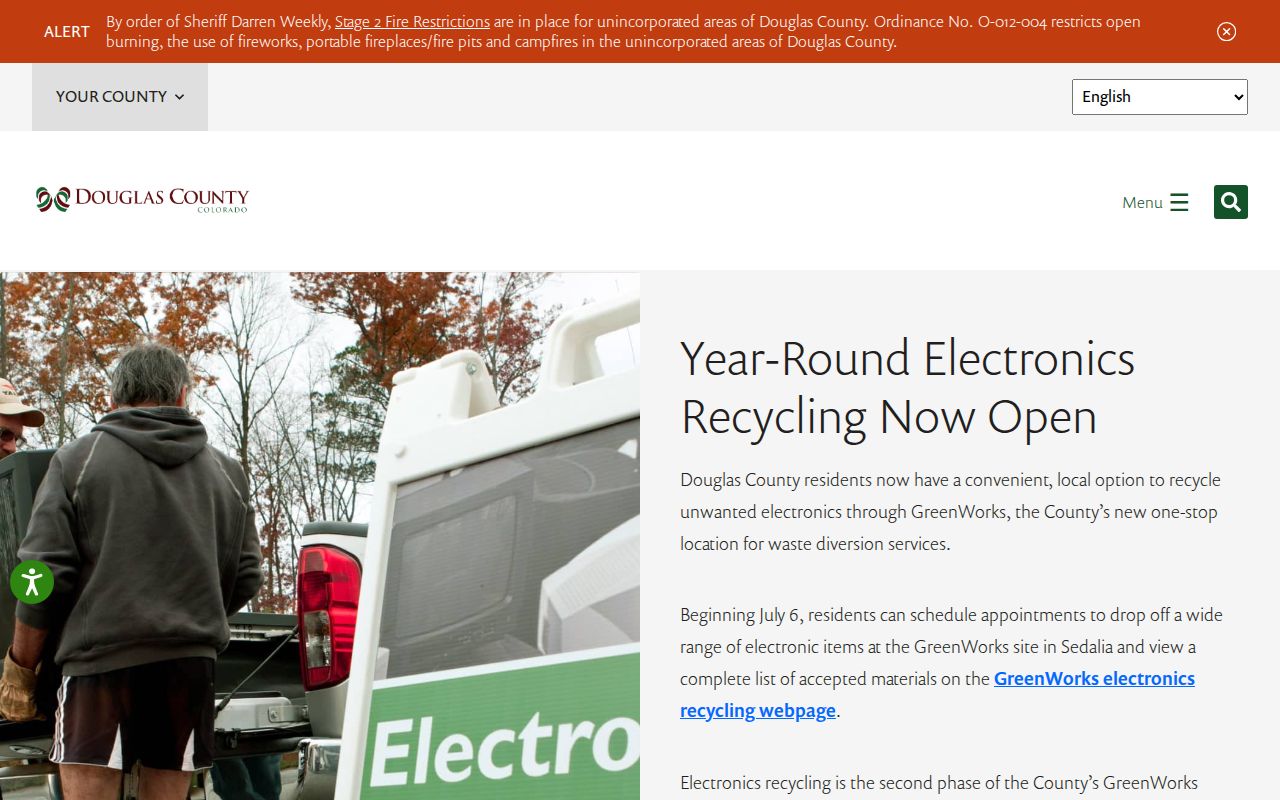
The county route is for administrative records; sheriff criminal-justice records and court files go to their own custodians.
Colorado Official Background Checks
The Colorado Bureau of Investigation keeps statewide Criminal History Record Information. Its Internet Criminal History Check is a name-and-date-of-birth search that costs $6 for each viewed result. It is fast, but it is not a fingerprint-confirmed identity match and cannot be notarized. CBI also offers a $13 staff-processed name request that may be notarized.
For a more reliable review of one's own Colorado record, Colorado Applicant Background Services collects fingerprints through IdentoGO by IDEMIA or Colorado Fingerprinting. The CBI public-inspection fee is $16.50 plus the vendor charge. A subject seeking federal history uses the FBI Identity History Summary process.
| Official channel | Cost | Best use |
|---|---|---|
| CBI ICHC | $6 per result | Quick Colorado name search |
| Manual CBI request | $13 | Staff search and optional notarization |
| CABS public inspection | $16.50 plus vendor | Fingerprint-based Colorado self-review |
The CBI records overview separates these routes.
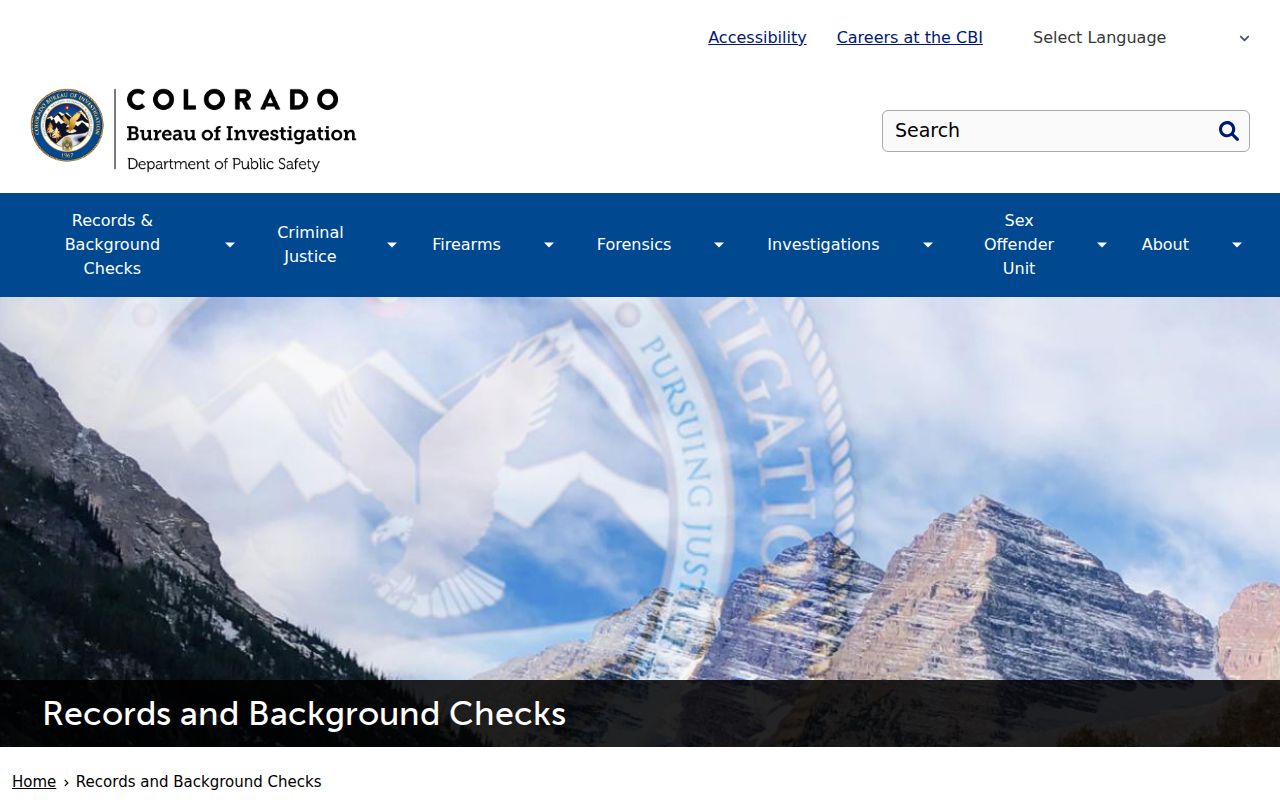
That distinction prevents a name-only result from being presented as certain identification.
Douglas County ICHC Search Fields
ICHC is statewide rather than a Douglas County database, yet it can connect a local fingerprint cycle with later dispositions reported to CBI. The user accepts the terms, enters the exact first and last name, and should add the correct date of birth. A Social Security number is optional. Suffixes such as Jr. or II should be omitted, and each alias or maiden name needs a separate paid search.
| Field | Requirement | Use |
|---|---|---|
| Terms agreement | Required | Accepts use and solicitation limits |
| First and last name | Required in guidance | Use exact spelling, no suffix |
| Date of birth | Strongly advised | Narrows common names |
| Social Security number | Optional | Further identity narrowing when known |
The live ICHC interface is shown below without displaying a private record.
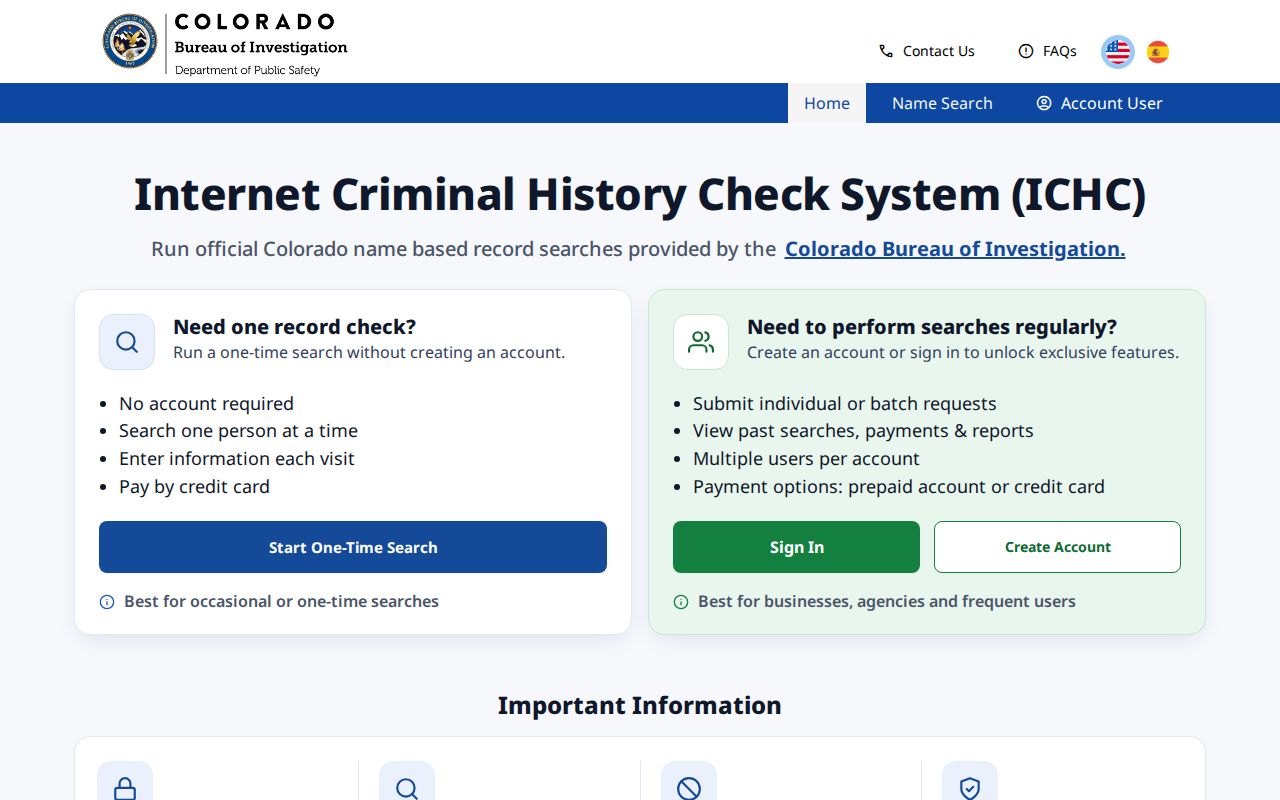
Multiple possible matches may each cost $6 to open, which is another reason to bring precise identity details.
Criminal Record Types
Douglas County criminal history is a chain of records, not one file. Police create incident and arrest narratives. DCSO creates booking and custody records when someone enters the county jail. The court creates the complaint, docket, orders, disposition, and sentence after charges are filed. CBI assembles fingerprint-linked arrest cycles and outcomes that agencies report statewide.
Warrants remain tied to the issuing court and serving agency. CDOC maintains state prison and parole data, while the Colorado Sex Offender Registry follows its own disclosure law. The custodian determines which fields are public and which are withheld or redacted.
- Arrest and booking records describe allegations, intake, bond, custody, and release.
- Criminal court files show what prosecutors filed and how the judge resolved it.
- CBI CHRI links reported Colorado arrest cycles with reported outcomes.
- Warrant records identify the issuing court, case, basis, and public bond data.
- Corrections and registry records reflect separate custody, supervision, or registration systems.
Douglas County Sheriff Requests
The DCSO records request page routes electronic submissions through JustFOIA. A requester may also take the fillable form to the Justice Center or Highlands Ranch Substation, or mail it to DCSO Records. General report questions go to 303-660-7545. Jail, medical, video, personnel, and request-status questions use 303-660-7524.
Describe the person, date, incident or case number, and exact item. The form separates criminal and incident reports from booking cards, booking reports, dispatch audio, body camera, jail video, and other media. DCSO says to allow three business days for contact, while large redaction or media work can take longer. Crime victims do not pay for their own records.
| Product | Published fee |
|---|---|
| Research, retrieval, redaction | $41.37 per hour |
| Black-and-white page | $0.25 |
| Color page | $1.00 |
| Photo or booking photo | $2 each |
| Local history letter | $10 for up to two copies |
The Sheriff's official site provides the agency view captured below.
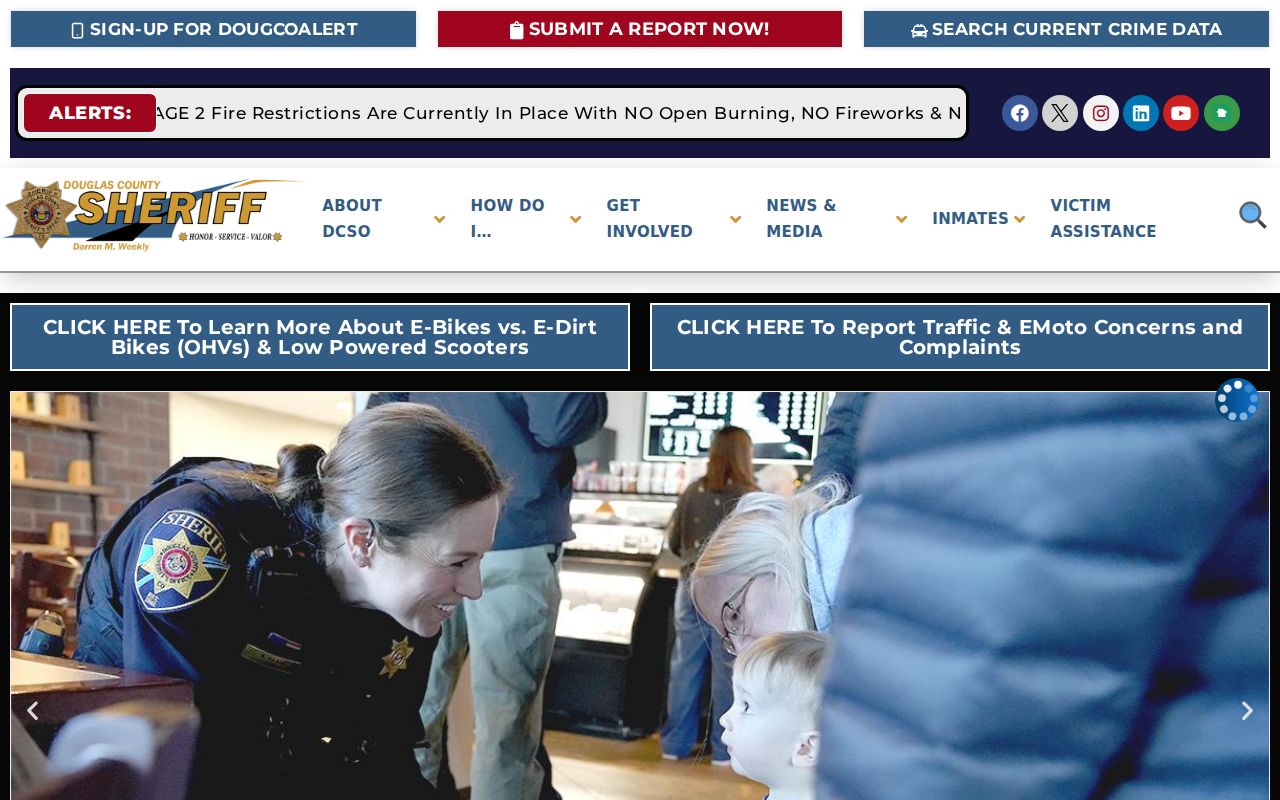
DCSO keeps sheriff and jail records, but a city police narrative stays with the city that created it.
Inside a Douglas County Criminal Record
The fields depend on the source. A CBI history may list identity and demographic data, arrest date, arresting agency, charges, court disposition, and sentence data reported back to the repository. A court file adds the charging document, appearances, hearings, motions, orders, fines, restitution, and linked public filings. A jail record focuses on booking, bond, housing, and release.
| Name & Identifiers | Names, aliases, birth data, and agency identifiers, subject to public-access limits. |
|---|---|
| Arrest / Booking Data | Event, agency, booking date, Global ID, custody, and bond fields. |
| Charges & Statutes | Alleged or filed counts and cited Colorado law. |
| Disposition | Dismissal, plea, verdict, deferred judgment, or other reported outcome. |
| Sentence | Jail, prison, probation, fines, restitution, and court conditions. |
| Custody / Supervision Status | Local jail, CDOC, probation, or parole status in the proper system. |
Douglas County Custody Layers
A free jail inquiry answers whether someone is held locally now or was recently booked. It does not prove the final charge or outcome. DCSO Booking at 303-660-7550 is the fallback when the inquiry is unavailable. VINE can send custody-status notices, but it is a notification tool rather than the official jail file.
State prison and some parole or community statuses belong in CDOC Offender Search. Federal custody belongs in the Bureau of Prisons locator. A person may move between these systems, so no result in one channel does not settle all custody questions.
The CDOC source appears below as a separate Douglas County criminal records layer.
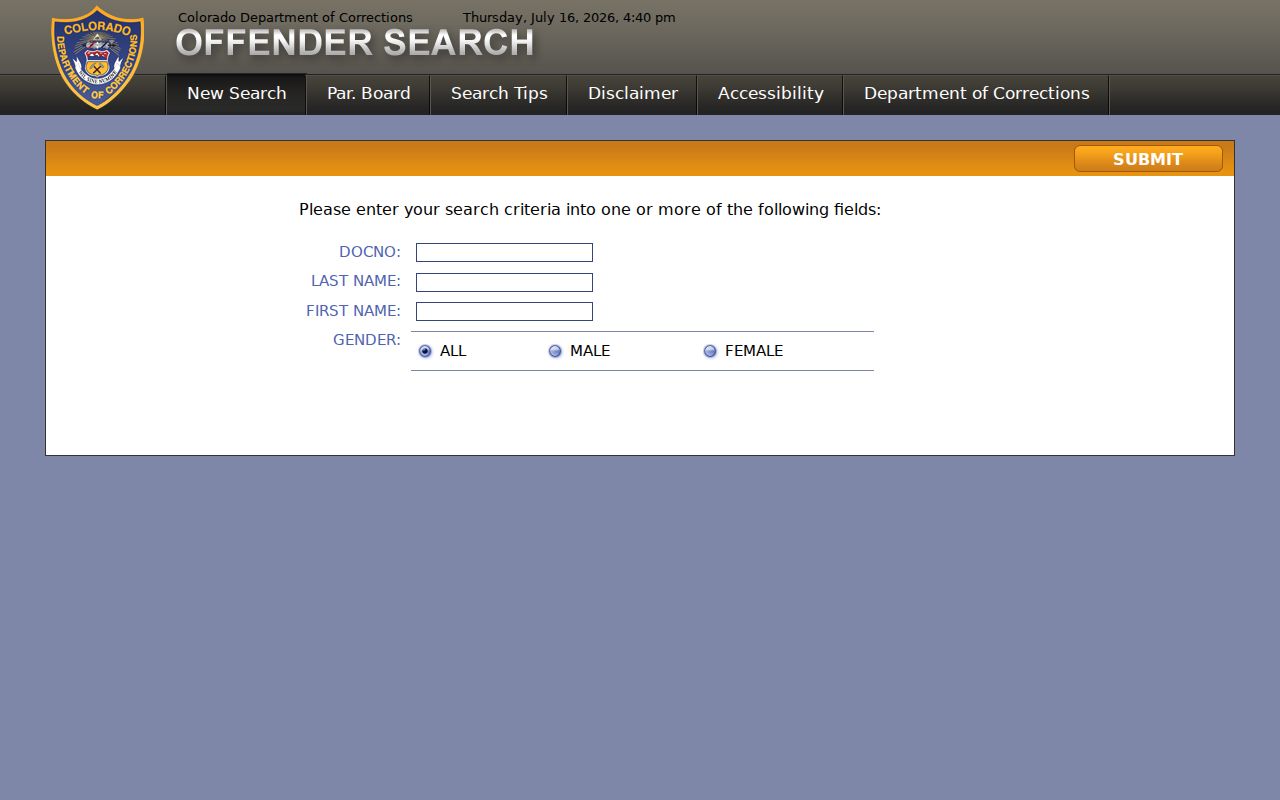
Use the court docket to verify the sentence that led to state custody or supervision.
Public Access Laws in Colorado
Colorado splits access by record type. The Colorado Open Records Act governs many general government files, while the Colorado Criminal Justice Records Act controls sheriff and police material. Chief Justice Directive 05-01 governs court records. A public label does not remove the custodian's duty to protect victim, juvenile, medical, sealed, or other restricted data.
Key Statutes:
C.R.S. 24-72-200.1 through 206 - CORA sets the general inspection process.
C.R.S. 24-72-301 through 309 - CCJRA controls criminal-justice records and redaction.
C.R.S. 19-1-304 - juvenile records receive special protection.
C.R.S. 24-72-305.5 - certain direct solicitation using these records is barred.
Douglas County's New Court District
Douglas County moved from the 18th Judicial District to the new 23rd Judicial District on January 14, 2025. It was Colorado's first new judicial district since 1965. That change matters in a criminal history search because older dockets, forms, and agency references may still say 18th Judicial District even though the current clerk and prosecutor operate under the 23rd.
Douglas Combined Courts still holds District Court felony files and County Court misdemeanor files at the Justice Center. Municipal ordinance and city traffic matters remain in Castle Rock, Parker, or Lone Tree Municipal Court. The clerk's case file is the source for charges actually filed, hearings, outcomes, and sentences.
The PACER system adds a federal layer only when a matter was filed in the District of Colorado.
County and state searches do not include federal dockets, so that channel must be checked on its own.
Sealed, Expunged, and Restricted Records
Colorado generally calls the adult remedy sealing and uses expungement for qualifying juvenile records. Sealing limits public access but does not mean every authorized government copy is destroyed. Nonconviction arrests and some convictions can qualify under different rules, waiting periods, and exclusions. Some newer noncharge records enter an automatic process.
A Douglas County petition goes to the court that holds the case. Judicial forms identify the right route, including JDF 416 for adult arrest records and JDF 611 for conviction records. After an order enters, allow time for custodians to apply it, then verify both the court search and one's CBI history. Public ICHC omits sealed arrests and protected juvenile material.
Correcting Douglas County Record Errors
Start by obtaining the actual CBI output and marking the arrest cycle, charge, or missing disposition that appears wrong. If the outcome is missing, request an official disposition from Douglas Combined Courts. If the arrest identifier is wrong, contact the police or sheriff's agency that submitted it. Supporting documents then go through CBI's correction or CABS fingerprint challenge route.
- Disposition
- The reported outcome of a charge or case.
- Deferred judgment
- A judgment held back while court conditions are completed.
- Mittimus
- The court order sent to a jail or corrections agency.
- Sealing
- A restriction on public access, not the physical destruction of all records.
For a federal self-review, the FBI electronic ordering portal uses fingerprints.
The federal summary is subject-only and does not replace the Douglas court or sheriff file.
Douglas County Warrant Checks
No official public countywide name-search warrant database was found. Verify a warrant through the issuing court's case channel, the DCSO Warrant Unit or records process, and the relevant municipal court for a city bench warrant. A public entry may show the case, issuing court, basis, active status, and bond, while sealed and juvenile details remain restricted.
DCSO warns that it never demands gift cards, money orders, card details, or phone payment instead of arrest. Anyone checking an apparent warrant for themselves should call the court or Sheriff through a published number, obtain the case and bond instructions, and confirm clearance after following the court's direction.
The Bureau of Prisons locator is shown below only as the federal custody fallback.
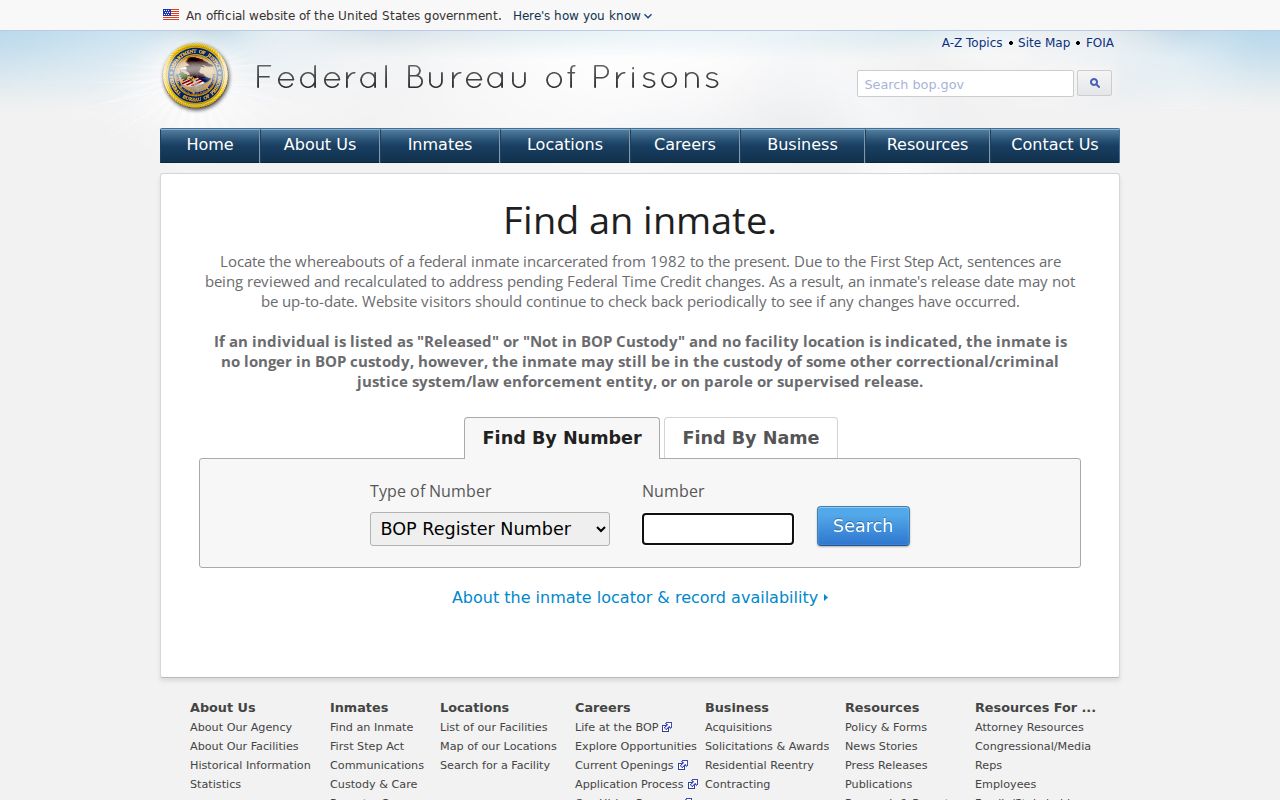
A custody result is not a warrant result and must not be read as one.
Douglas County Criminal Records by City
Castle Rock, Parker, and Lone Tree police keep the reports their officers create, and each municipal court keeps its own ordinance and local traffic matters. Arrests can still lead to booking at the Douglas County jail, while state charges move to Combined Courts. Starting with the city avoids asking DCSO for a report it does not hold.
Castle Rock Criminal Records
83,213 · Police Records and Municipal Court use separate local request forms.
Parker Criminal Records
65,473 · Police Records accepts online and direct form requests.
Lone Tree Criminal Records
14,061 · Police and Municipal Court share the Kimmer Drive address.
How Douglas County Records Connect
A local event can create parallel files in minutes, then change as the case moves. The simplest flow is: Police report → DCSO booking → fingerprint cycle to CBI → prosecutor filing decision → Douglas Combined Courts docket → disposition reported to CBI. A dismissal in court does not erase the original police report or booking entry.
The U.S. District Court for Colorado is the separate filing court for a federal case. Ordinary Douglas County charges remain in state or municipal court.
Delayed disposition reporting, missing fingerprints, common-name ambiguity, and legal sealing can make official results differ. Compare source dates and identifiers, then use the originating custodian to resolve the gap.