
Douglas County Criminal Court Cases
Douglas Combined Courts at 4000 Justice Way in Castle Rock houses the District and County Court clerks. District Court is the trial court for felonies. County Court hears misdemeanors, traffic matters, and preliminary stages of many felony cases. The clerk records what prosecutors filed, what happened at each hearing, and how the judge resolved the case. The 23rd Judicial District Attorney handles state prosecutions.
Castle Rock, Parker, and Lone Tree municipal courts keep separate ordinance dockets. A city citation does not automatically appear as a state District or County Court file. Searchers should read the ticket, summons, or case number before choosing a clerk. A police incident number is also not the same as a court case number.
The Colorado Judicial Branch profile of Douglas Combined Courts shows the official local court. The image below reflects the county court source used for this Douglas County criminal court case research.
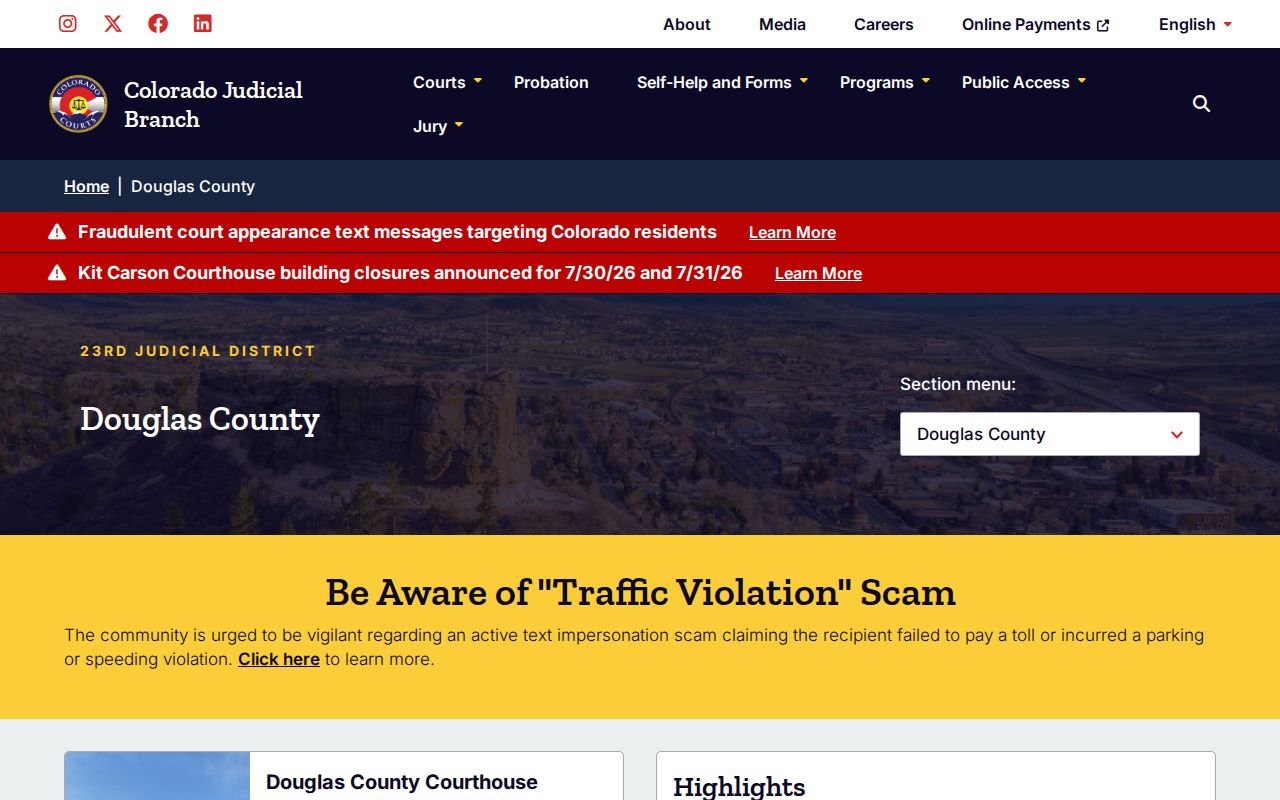
That court page is the right checkpoint for current contacts and changes in access.
Douglas Court Requests at Suite 2009
The Records Department is in Suite 2009 at 4000 Justice Way, Castle Rock, CO 80109. Requests may go to Douglasrecords@judicial.state.co.us, by mail, or to the counter. The published phone is 720-437-6200, and the clerk warns that documents are not accepted by fax. Court-record responses generally follow a three-business-day baseline, though broad or difficult requests can take longer.
Give the clerk a case number when possible. If it is unknown, provide the party's full name, date of birth if known, approximate filing year, and case class. State exactly whether an ordinary copy, certified copy, register of actions, charging document, minute order, or disposition is needed. Narrow terms reduce the chance that the clerk must ask for clarification.
Douglas Combined Courts Records
4000 Justice Way, Suite 2009
Castle Rock, CO 80109
720-437-6200
Douglasrecords@judicial.state.co.us
Searching Douglas County Case Records
Colorado offers online court indexes through approved public-access channels, while the clerk remains the source for the official file. Online results are best treated as a lead. A vendor register may omit protected entries and is not a certified copy.
- Choose the criminal case search and identify Douglas County or the 23rd Judicial District.
- Search by exact case number, or use a full party name with a filing-year range.
- Compare the case class, court, date of birth when displayed, and filing date before selecting a result.
- Read the register of actions in date order and distinguish charges filed from later amended or dismissed counts.
- Ask Douglas Combined Courts for the exact document or certification needed.
| Field label | Type | Required | Use |
|---|---|---|---|
| Case number | Text | No | Most precise route when known |
| Last and first name | Text | No | Use exact spelling and known prior names |
| Date of birth | Date | No | Helps separate namesakes |
| County or court | Select | No | Choose Douglas County |
| Filing year or case class | Select | No | Narrows a broad result set |
Reading a Douglas Case Number
A Colorado case number commonly combines the filing year, a case-class code, and a serial number. Criminal classes can distinguish District Court felony matters from County Court criminal matters. The caption and court name control; a familiar year or serial alone is not enough. Old files may still carry an 18th Judicial District caption because Douglas County moved into the new 23rd Judicial District on January 14, 2025.
That transition did not erase or restart older dockets. Search both the older caption and current Douglas court channel when researching a matter that crossed the change. The file date, court division, and case number provide a safer match than the district label by itself.
Inside a Douglas County Case File
The court file documents the prosecution as it reached the judge. It differs from the police narrative and jail booking record. Some evidence may be described on the docket without being available as an unrestricted public document.
| Case number and court | Identifies the filing year, case class, serial, division, and custodian. |
|---|---|
| Charging document | Shows counts actually filed by the prosecutor, which may differ from arrest allegations. |
| Docket entries | Chronological register of filings, hearings, orders, pleas, and settings. |
| Hearing dates | Past appearances and future settings, subject to later change. |
| Disposition and judgment | Records dismissal, plea, acquittal, conviction, or other outcome by count. |
| Sentence and conditions | May state custody, probation, fines, restitution, treatment, and other ordered terms. |
A register entry is often enough to locate an event, but the signed order or minute entry supplies the fuller official language.
District Felonies and County Misdemeanors
The level of the filed offense determines the main trial court. District Court hears felony prosecutions and can handle post-conviction work tied to those cases. County Court hears misdemeanors and petty offenses and conducts early proceedings in some felony matters before transfer. Municipal courts hear local-code cases only.
This split matters when a name search returns nothing. A city summons may remain with Castle Rock, Parker, or Lone Tree Municipal Court. An arrest can also produce a booking without a later filed criminal case. Start from the document in hand and follow its court name rather than assuming every Douglas County event shares one index.
How a Criminal Case Moves
Once a prosecutor files charges, the docket follows the court events rather than the booking timeline. A count can be amended, dismissed, tried, or resolved by plea, and the final disposition must be read count by count.
Case flow: Charges Filed › Arraignment › Pretrial › Plea or Trial › Disposition › Sentencing
Bond hearings can occur before the full case settles, including the published Saturday 2 p.m. setting at Justice Way. A release decision is not a disposition. Likewise, a plea entry is not the full sentence unless the docket and judgment show sentencing has occurred. For the earlier custody trail, use the Douglas County arrest lookup alongside the court file.
Unknown Dispositions in CBI Records
A Colorado Bureau of Investigation criminal-history result can carry an arrest cycle without a reported final outcome. The fix begins at Douglas Combined Courts. Locate the matching case, request the certified or official disposition, and compare the name, date, agency, charges, and arrest cycle before asking CBI to correct its repository record.
The court corrects its own docket; CBI corrects the statewide criminal-history record. An arresting agency addresses an incorrect arrest identifier. These are separate custodians, so sending the same request to all three without first identifying the error slows the work. A sealing order also follows its own court and CBI implementation path.
Federal Cases Beyond Douglas Courts
A federal prosecution arising in Douglas County is filed in the U.S. District Court for the District of Colorado, not Douglas Combined Courts. PACER is the federal docket channel. Registration is free; pages generally cost $0.10, documents have the usual $3 cap, and quarterly charges of $30 or less are waived.
The District of Colorado court site is the filing-court source for federal Douglas County criminal cases.
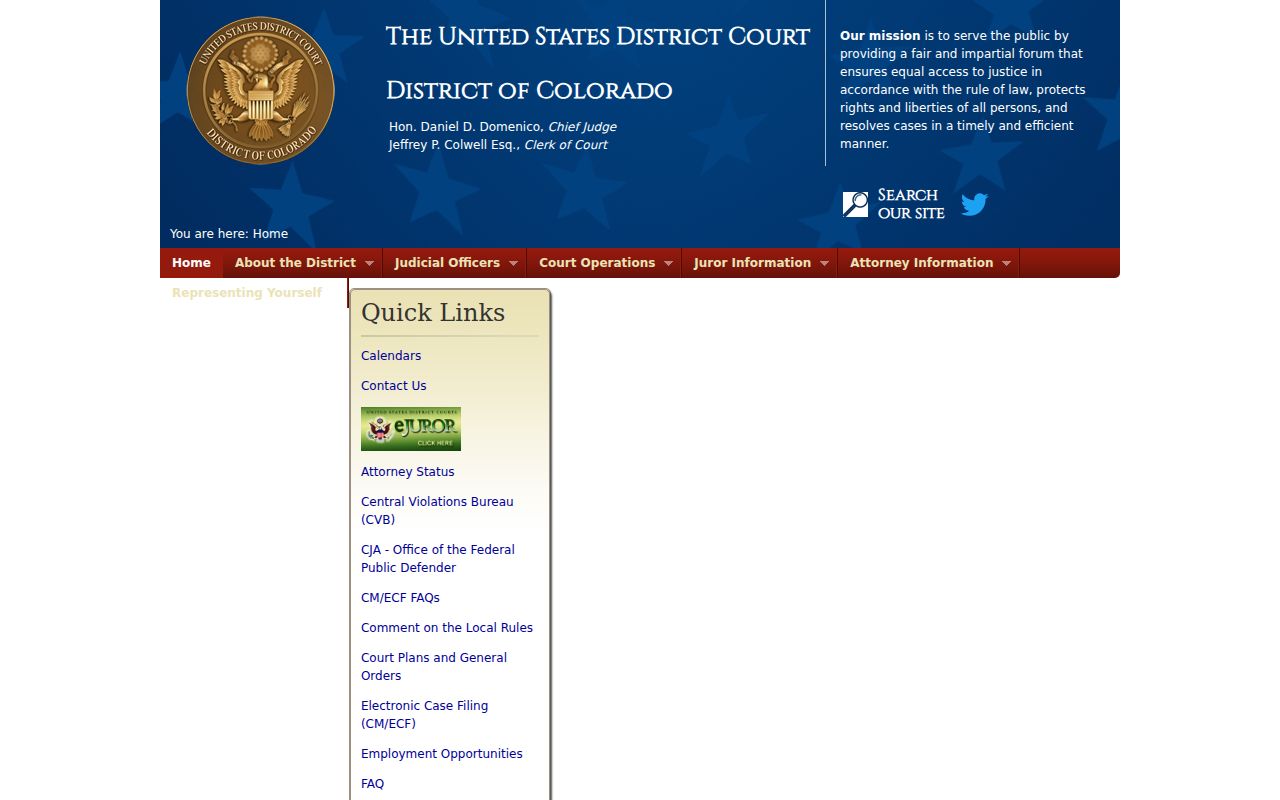
This federal channel supplements, but does not replace, the Douglas County and Colorado court search.
Federal prosecutions are handled by the United States Attorney for Colorado.
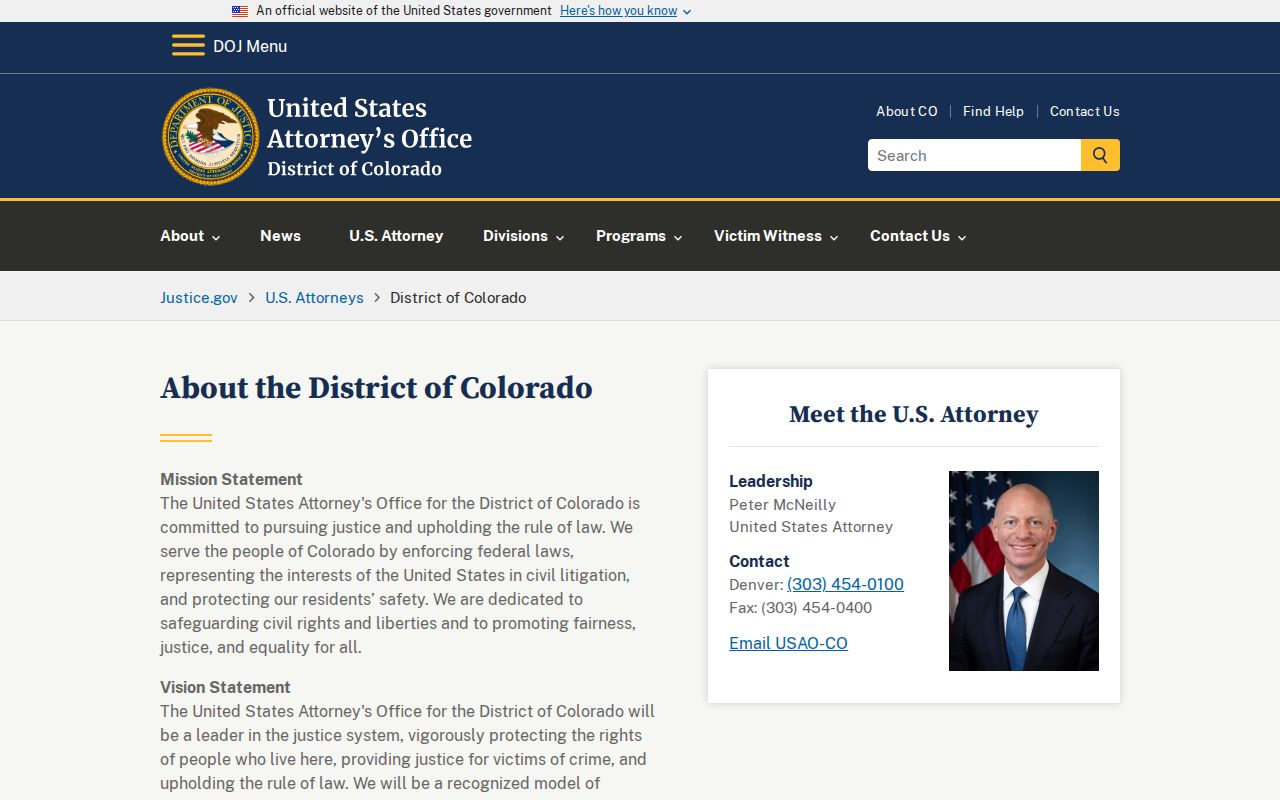
The prosecutor page helps identify federal case context, while the court docket remains the record of filings and outcomes.
Case Record Access and Restrictions
Colorado court records can be public while particular documents or fields remain protected. Juvenile matters, sealed cases, victim identifiers, medical information, certain addresses, and suppressed materials may be restricted. A docket can acknowledge that a filing exists without exposing its contents. Court staff apply judicial rules and statutes to each request.
Colorado Criminal Justice Records Act rules govern many criminal-justice records, while court files are also controlled by court access rules and orders. Sealed does not mean that every custodian's copy vanished at once. A person checking an entered sealing order should verify both the Douglas docket and the relevant CBI record after processing time.