
Sex Offender Checks in Douglas County
The Colorado Bureau of Investigation manages the Colorado Sex Offender Registry through CCIC. Its public portal updates hourly and offers SEARCH, MAP SEARCH, MOST WANTED, and NOTIFICATIONS after a disclaimer gate. DCSO keeps the complete local adult list for unincorporated Douglas County, while city police departments register people who live inside incorporated municipal limits.
Use the portal for a fast public check, DCSO or the city agency for the fuller local route, and NSOPW when someone has lived outside Colorado. None of these channels should be read as a promise that every registrant is visible online.
The official Colorado registry is the first search channel.
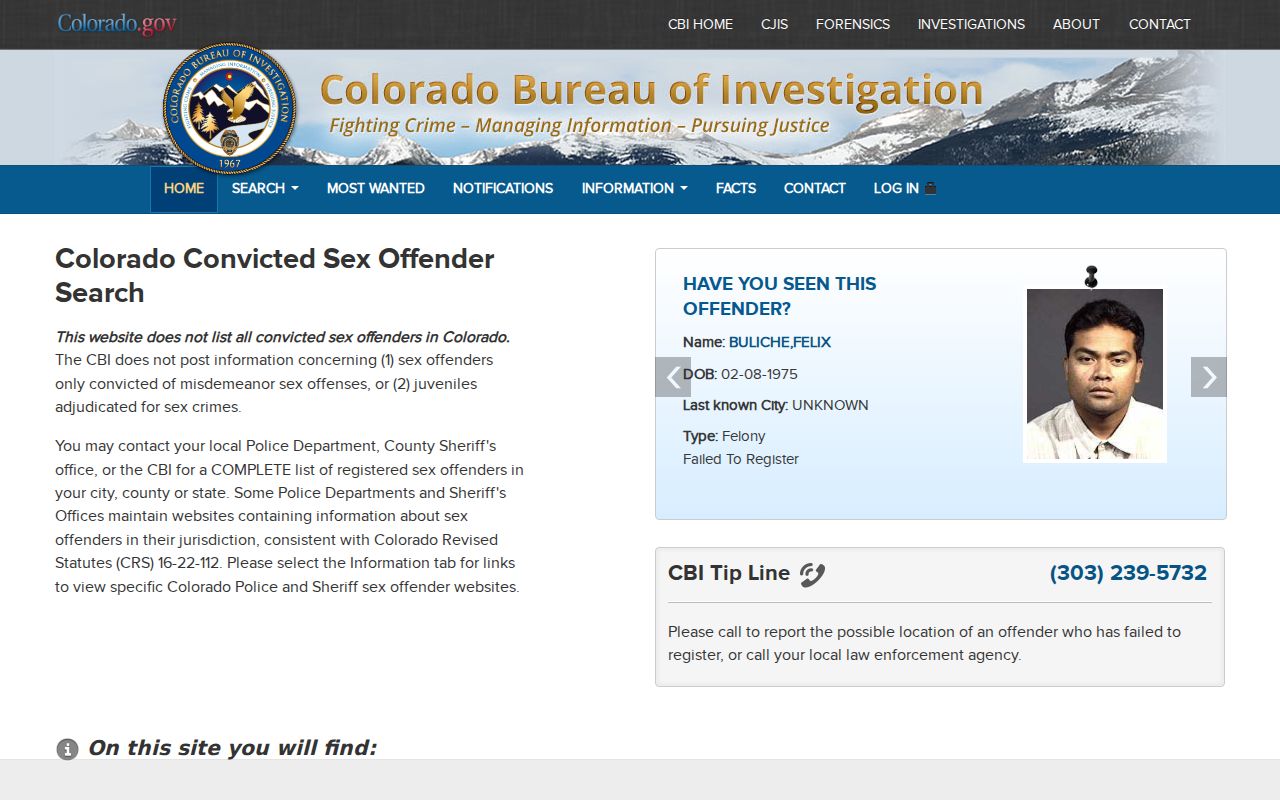
The portal image represents the public layer, which is narrower than the complete local adult register.
Why Douglas Web Results Are Incomplete
Colorado law limits the categories displayed on the ordinary public website. The visible groups include sexually violent predators, adult multiple offenders, adults who failed to register for a felony sex offense, and adults registered after a felony sex-offense conviction. Misdemeanor-only adult registrants and juvenile adjudications do not appear in the ordinary public portal.
That means “no result” does not mean “not registered.” For a complete local adult list, request the DCSO list or CBI adult-list product. DCSO provides its local list free in person with photo identification and a form. CBI's adult list costs $20 and CBI states an approximate ten-business-day response.
How to Search the Colorado Sex Offender Registry
Begin with enough identifying and location detail to separate namesakes. Only a fingerprint comparison can positively confirm identity, so compare the whole profile rather than relying on a name alone.
- Open the CBI portal, read the disclaimer, and select SUBMIT.
- Choose SEARCH for a name or MAP SEARCH for a geographic or address-based view.
- Compare aliases, date of birth, photograph, address, physical description, offense, and status.
- Open the full profile, note the registration agency, and use NOTIFICATIONS if ongoing local updates are useful.
| Control | Type | Required | Purpose |
|---|---|---|---|
| Disclaimer agreement | Gate/button | Yes | Must be submitted before searching |
| SEARCH | Tab | No | Name-oriented public lookup |
| MAP SEARCH | Map | No | Geographic and address search |
| MOST WANTED | Tab | No | Noncompliant or fugitive subjects, not a general warrant list |
| NOTIFICATIONS | Tab | No | Enrollment for registry notices |
Douglas Registry Tools Explained
SEARCH is suited to a known name. MAP SEARCH is better for neighborhood awareness near a home, school route, or family destination. MOST WANTED concerns subjects identified as noncompliant or wanted in the registry context; it does not replace a Douglas County warrant search. NOTIFICATIONS provides a way to monitor changes without repeating the same query.
The CBI Sex Offender Registration Unit explains the state program.
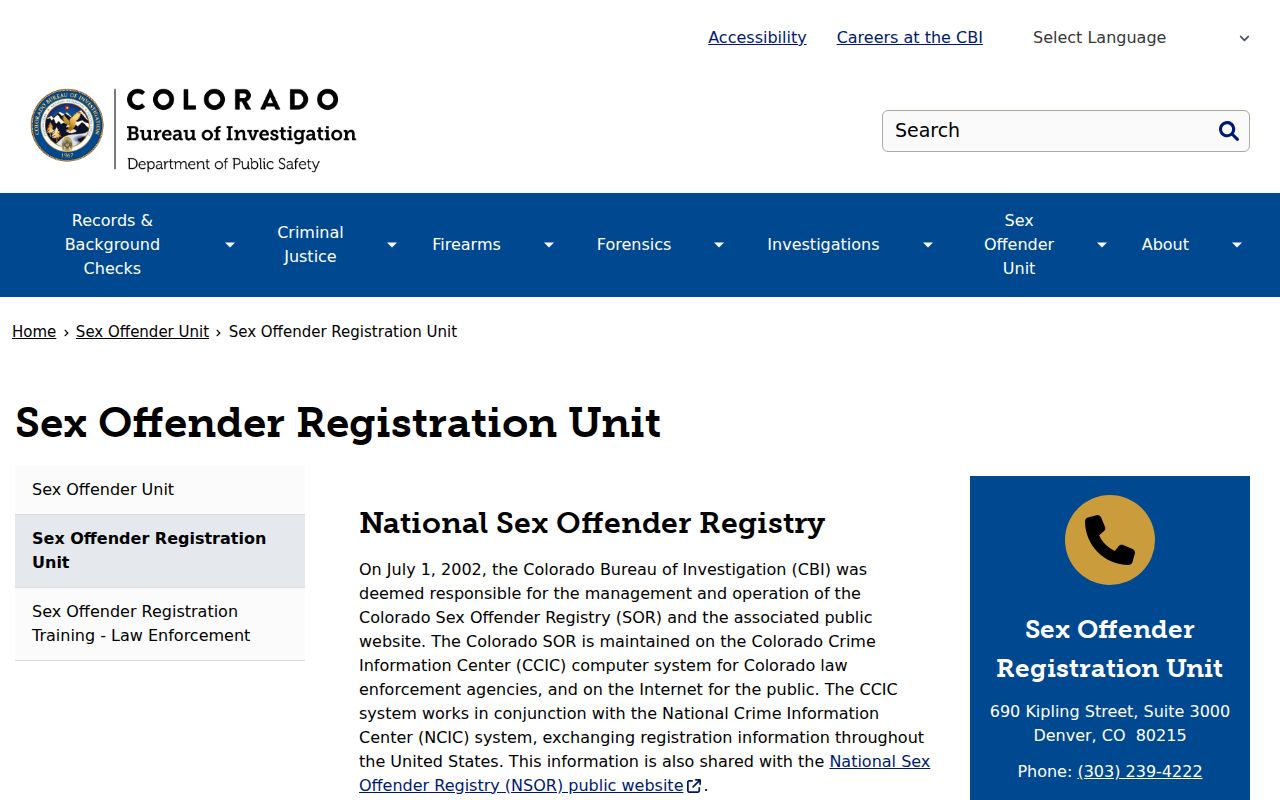
This official program source supplies the context behind the public search controls and local registration duties.
Inside a Douglas Registry Profile
Public profile fields help a reader determine whether a result likely concerns the right person and which agency holds the registration. Victim identity is not released, and protected information does not become public merely because a profile exists.
| Name and aliases | Published identity names associated with the registration record. |
|---|---|
| Photo and description | Available image and identifying physical traits; fingerprints remain the positive match. |
| Registered address | Current address or addresses released by law and the responsible jurisdiction. |
| Offense and statute | Qualifying offense plus offense and conviction dates when released. |
| Category | Public status such as SVP, multiple offender, felony registrant, or failure to register. |
| Compliance status | Registration or noncompliance information maintained by the reporting agency. |
Profiles describe registration data, not a person's entire court or arrest history. The originating court file remains the source for the conviction record.
Namesake Results Need Care
A familiar name is not enough to identify a person. Compare date of birth, aliases, photograph, physical description, addresses, offense dates, and the local registering agency. If key fields conflict, do not draw a conclusion from the name match.
CBI expressly cautions that only fingerprint comparison positively confirms identity. Public-safety use calls for restraint: verify through the listed law-enforcement agency, avoid reposting unconfirmed information, and never confront a person based on a search result.
Colorado Registration Levels and Requirements
Colorado does not publish registrants as federal-style Tier I, II, and III labels. Frequency and duration depend on the qualifying offense and status. Registration generally begins within five business days of release or notice, and a name or address change generally must be reported within five business days.
| Colorado category | Duration | Frequency and visibility |
|---|---|---|
| Sexually violent predators and listed serious adult convictions | Life | Quarterly; statutorily public |
| Adult multiple offenders or other quarterly registrants | Generally life unless law and court order permit otherwise | Quarterly; public category when statute allows |
| Other eligible registrants | Continues until a court discontinues it | Generally annual; online visibility depends on the public category |
A move can create duties in more than one Colorado jurisdiction when a person maintains multiple residences. Within Castle Rock, Parker, or Lone Tree, registration is with city police. Outside an incorporated municipality, DCSO is the local registration agency.
Five Business Days in Douglas County
The five-business-day clock applies to initial registration after release or notice and to changes such as an address or legal name. Registration continues unless and until a court ends the duty. Moving away, failing to appear in the web portal, or reaching a guessed anniversary does not end it.
Readers reporting possible noncompliance can contact the registration agency shown in the profile or CBI's registration tip line at 303-239-5732. Emergency threats belong with 911. Tips should give concrete facts and should not become direct contact or public accusation.
Annual and Quarterly Douglas Registration
Many registrants verify annually, while SVPs and certain serious or multiple-offender categories verify quarterly. The schedule is a compliance rule, not a public risk ranking. Colorado's public site should not be rewritten into a three-tier chart the state does not use.
Local agencies collect and verify registration data, then CBI manages the statewide system and exchanges data with national systems. Hourly portal updates make the web layer timely, but statutory exclusions still remain. Speed does not make the public portal complete.
NSOPW Adds the Cross-State Layer
The Dru Sjodin National Sex Offender Public Website searches participating jurisdictions across the country. It is useful when a person has moved between states or when the relevant address sits outside Colorado. Its results still depend on what each jurisdiction is legally allowed to publish.
The official NSOPW search is the correct national supplement.
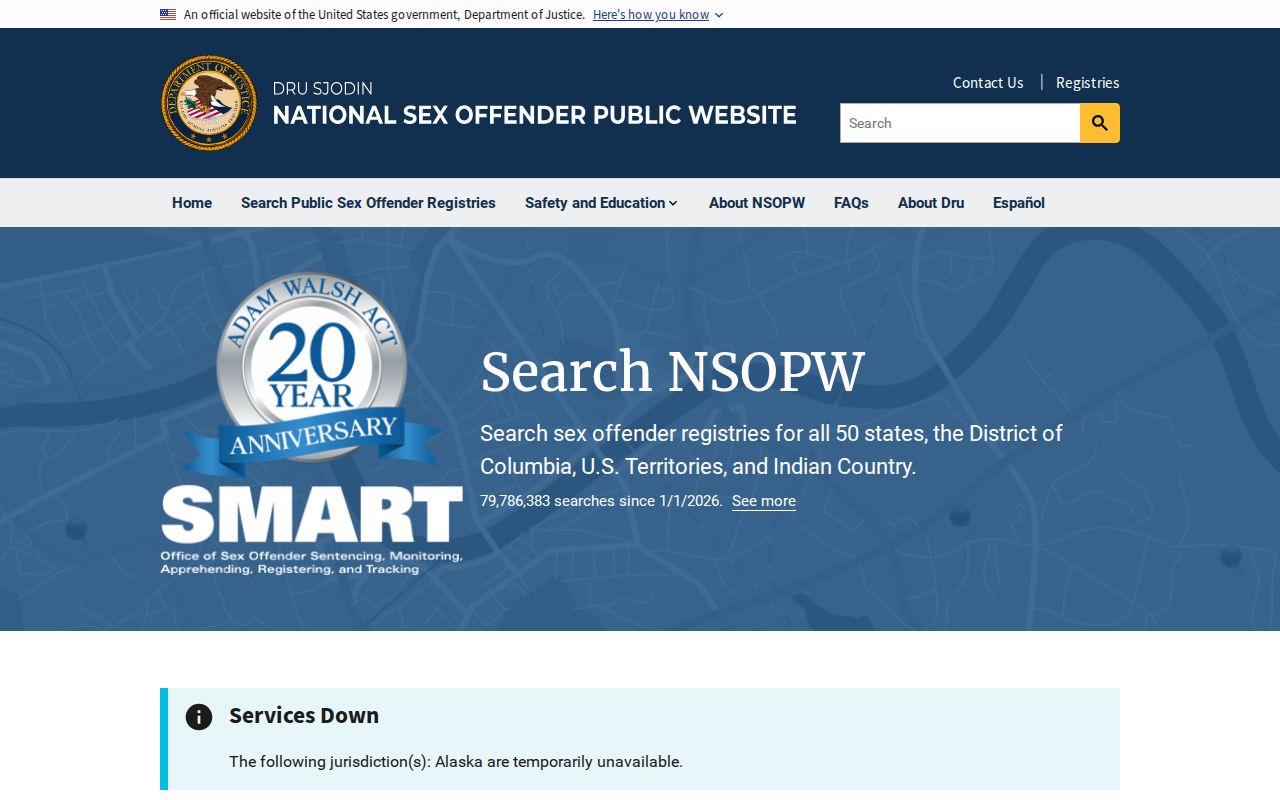
This national layer broadens geography but does not replace DCSO, city police, or CBI for Douglas County registration details.
When Registration May End
Eligible people must petition a court and obtain an order; time alone does not remove the duty. Research identifies thresholds of 20 years for eligible non-quarterly class 1 through 3 felonies, 10 years for eligible class 4 through 6 felonies and specified former class 1 misdemeanors, and five years for other misdemeanors. Time is measured after final release from court jurisdiction, and disqualifiers apply.
SVPs, multiple offenders, and quarterly registrants are generally ineligible. Anyone evaluating personal eligibility should use the actual statute and court process rather than relying on a public profile date. The registry remains active until the court order is entered and implemented.
Community Notification and Lawful Use
Registry information supports personal, family, neighborhood, and community safety. It does not authorize harassment, threats, vigilantism, trespass, or discrimination. Readers should use NOTIFICATIONS for official updates and contact law enforcement about a concrete compliance concern.
The Colorado Revised Statutes provide the controlling legal text.
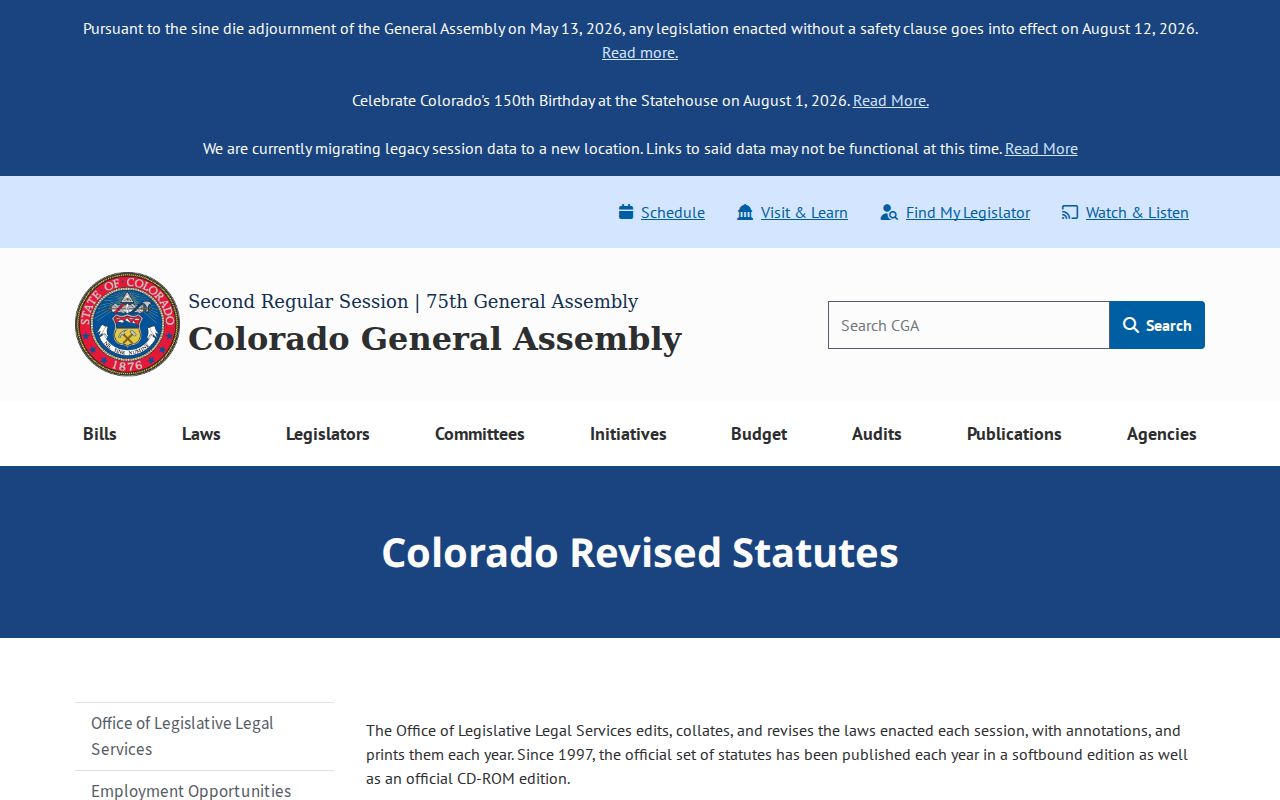
The statute source sets the legal boundary for both public access and responsible use of Douglas County registry information.